Magnify: A Graffiti Statement That Demands the Right Project
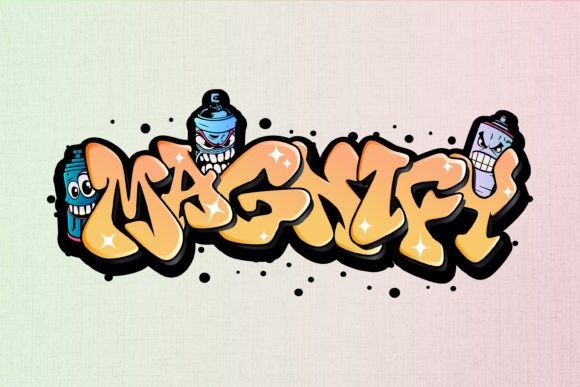
There is a moment in every designer's workflow when you open a new file and immediately know whether it belongs on a finished product or stays buried in a hard drive folder. Magnify arrived on my screen with that exact kind of presence. It is not polite. It is not subtle. The graffiti lettering typography art illustration hits with the confidence of street art, the kind of visual voice that refuses to whisper. My first thought was not about whether the lines were clean or the curves were balanced—they are—but about which embroidery project could actually carry this much personality without collapsing under stitch density or losing its soul to a hoop that is one size too small.
The shapes within Magnify lean into exaggerated proportion and expressive flow. It reads as urban, bold, and unapologetically graphic. If you are building a brand around loud self-expression, custom streetwear, or statement pieces that stop a scroll, this design has the bones for it. But as anyone who has wrecked a perfectly good sweatshirt knows, what looks electric on screen can turn into a thread disaster on fabric if you do not ask the right questions before you hoop up.
When Wild Lettering Meets the Embroidery Machine
I have tested enough typography-heavy designs to know that graffiti-inspired artwork lives in a tricky middle ground. The organic, hand-drawn quality that makes Magnify feel so alive is also what demands careful stitch planning. Every tag-like flourish, every stretched counter, every exaggerated serif-like extension needs room to breathe. The moment I loaded the file, I imagined it stitched onto a heavyweight cotton tote bag—natural canvas, no stretch, generous surface area—and that felt like the right marriage. A tote can handle the visual weight of Magnify without puckering or pulling. It also gives the design enough negative space around it, which is something I always insist on when working with lettering that is meant to be read from a distance.
But tote bags are just the beginning. This is a design that could live beautifully on the back of a denim jacket, centered on a unisex crewneck sweatshirt, or framed inside a large embroidered patch destined for a backpack or hat collection. I would not try to force it onto a baby onesie or a narrow apron strap, simply because the detail level deserves a broader canvas. The typography itself is what carries the visual appeal, and when you shrink lettering past a certain point, satin stitches start fighting each other in the corners. That is not a flaw in Magnify—it is the reality of any text-heavy design. Choose your hoop size wisely and respect the scale the artwork was drawn at.
Thread Choices That Honor the Street Art Soul
One of the smartest things a designer can do before running Magnify is to test thread color contrast against both light and dark fabric. Graffiti lettering often thrives on high contrast, but embroidery thread does not behave like ink. I pulled up the PNG file and dropped it onto a black mockup first, just to see how the negative space would work in reverse. The result was unexpectedly strong. On a dark hoodie, Magnify takes on an almost neon glow if you choose a vibrant thread palette—think electric orange, lime green, or cobalt blue. On natural linen or oatmeal cotton, it feels more grounded, like something hand-painted at a market stall.
For small shop owners who sell custom apparel or personalized gift items, this means Magnify offers genuine versatility across product types without needing heavy edits. You can pair it with a monogram, a date, or a short name beneath the main lettering and suddenly it becomes a boutique product ready for an Etsy listing. I have seen sellers build entire collections around a single strong typographic design like this, rotating thread colors seasonally and marketing each variant as a limited drop. That works, but only if the base design is strong enough to anchor the whole concept. Magnify qualifies.
A Real Project Walkthrough: The Sweatshirt Test
Let me walk you through a real scenario, because that is where actual design judgment lives. Imagine a client ordered a custom embroidered sweatshirt for her daughter's birthday. She wants something cool, something that does not look like it came from a mall kiosk. She sends over a few reference images of streetwear brands she admires. You open Magnify and immediately see the potential. You decide to stitch it across the chest in a slightly off-center placement, breaking the symmetry just enough to feel intentional. The fabric is a midweight French terry, stable but with a soft hand. You choose a poly-core thread in neon coral and a charcoal sweatshirt body. Before you even hoop the garment, you run a stitch-out on scrap fabric. The fill stitches settle cleanly. The letter connections hold without pulling. You check the backside and feel no excessive density. That is when you know this design was built with real use in mind.
The client receives the finished sweatshirt and sends a photo of her daughter wearing it to school. That single image becomes the most valuable marketing asset in your portfolio. Customers respond to authenticity. Magnify delivers it, provided you have done your job as the stitcher and not cut corners on stabilizer choice or hooping technique. That is not a small caveat. On stretchy or highly textured fabric, any bold design with connected letterforms will show every mistake. Use a cutaway stabilizer for knits, a tear-away for wovens, and always baste when working with fleece or anything that shifts under the needle.
Where Magnify Fits into a Craft Business Lineup
If you are a craft business owner juggling multiple product categories, the real value of Magnify lies in how many directions you can take it. This is not a niche seasonal graphic. It works on tote bag design mockups just as naturally as it does on sweatshirt embroidery placements or embroidered patch displays for a craft fair table. I have mentally slotted it into at least five different product ideas without stretching the concept. A set of kitchen towels with Magnify stitched in a contrasting thread becomes a housewarming gift that feels curated. A canvas pouch with the design centered on the front gains an edge that plain typography rarely delivers. A denim cap with a smaller, carefully edited version of the lettering creates a streetwear accessory that teenagers actually want to wear.
There is also a quiet opportunity here for sellers who specialize in baby embroidery or nursery items. That might sound counterintuitive for graffiti lettering, but think about it. A child's name rendered in a softened version of this style—perhaps using pastel thread on a cream blanket—creates a personalized piece that parents perceive as artistic rather than juvenile. The key is thread color and fabric texture. You shift Magnify from urban to whimsical simply by changing the canvas. That is the mark of a well-drawn design. It does not trap you in one aesthetic lane.
Digital Assets, Mockups, and the Licensing Conversation
Because this pack includes AI, EPS, SVG, and PNG files, it opens doors beyond the embroidery machine. I have used similar digital embroidery file packs to create printable mockup sheets for customers who want to preview their customizations before committing to thread. The transparent PNG at 300dpi makes that process clean. You can layer Magnify onto a digital product preview, swap background colors, add a customer's name in a complementary font, and present it as a proof. That step alone has saved me hours of back-and-forth and reduced order cancellations significantly.
For Etsy seller and small shop product workflows, the availability of vector formats means you can also use Magnify for branding purposes—think packaging inserts, hang tags, or social media graphics that match your embroidered product line. Visual consistency across platforms builds brand consistency and buyer engagement in ways that generic clip art never will. However, check licensing carefully before using this graphic as part of a logo or on merchandise you plan to sell at scale. The listing is clear that no physical product is included, and it is an instant download. Confirm what commercial use is permitted before you stitch it onto fifty hats and list them online. That conversation is between you and the license terms. I am simply the designer reminding you to have it.
Fabric, Scale, and the Small Detail Reality Check
Let me speak plainly about what can go wrong if you skip pre-production testing. Magnify contains design elements that may include tight interior spaces, sharp directional changes, and overlapping strokes. On a stable woven fabric with the right hoop size and a clean stitch density, these features stitch out beautifully and give the lettering that hand-sprayed dimension. On thin or loosely woven fabric, you risk puckering around those same details. I learned this lesson years ago on a lightweight jersey tee. The design looked crisp in the hoop and drew up into a gathered mess the moment I unhooped the fabric. My fault, not the artwork's.
Test Magnify on a fabric swatch that matches your final product. Check how fill stitch areas interact with satin stitch borders, if applicable. Watch for thread breaks at corners. Pay attention to pull compensation, especially on curved surfaces like caps or near seams on constructed garments. If you are producing holiday embroidery gifts at volume, these small tests are your insurance policy. Customers remember how a product holds up after washing. Magnify, stitched correctly, will survive regular laundering without distortion. Stitch it poorly, and you will see fraying or thinning around the most detailed letter connections within a few cycles.
The Unspoken Value of a Design With Real Personality
There are thousands of typography graphics available for download. Most are forgettable. Magnify stays in memory because it carries a specific mood and refuses to dilute it. That matters more than many makers realize. When a customer opens a package and sees a finished product with this design on it, they are not just evaluating thread tension. They are reacting to the attitude of the piece. Is it cool? Would they wear it? Would they gift it? Magnify creates that reaction. I have seen the quiet confidence that comes over a handmade item when the graphic does the heavy lifting of storytelling. You are not just selling a stitch-out. You are selling a point of view.
For commercial embroidery work, that point of view translates directly into perceived value. A plain sweatshirt costs twenty dollars. A sweatshirt with Magnify stitched across the chest in the right thread color reads as a sixty-dollar boutique purchase. The difference is entirely in the design choice. Apparel decorators who understand this psychology build loyal customer bases because they consistently pick artwork that feels intentional. Magnify earns its place in that category. It is not a filler graphic. It is a centerpiece.
Where to Begin, and What to Watch For
If you are about to load Magnify onto your machine for the first time, start with a midweight cotton or a cotton-poly blend in a light to medium color. Run the design at the largest size your hoop allows, assuming the file supports it. Inspect every letter connection. Look at how the thread lays on the surface. If you notice any areas where the design feels dense under your fingers, adjust your machine tension or consult the file details before altering anything. The artwork itself—the graffiti lettering typography art illustration—is the foundation. Your job is to preserve its character while adapting it to thread and fabric.
From a product reviewer's perspective, Magnify delivers on the creative promise. It fits neatly into categories like T-Shirt Designs and Graphics because it translates well to both custom apparel and digital presentation. Whether you are building a full embroidery collection, designing a one-off gift, expanding your Etsy catalog, or testing new concepts for a craft fair table, this design offers the kind of flexibility that experienced makers look for. Treat it with technical respect. Test thoroughly. Choose your canvas with intention. Magnify will reward that effort with results that stand out and sell.