5,4,3,2,1 Happy New Year: An Embroidery Designer’s Honest Review
When a countdown meets needle and thread, the result has to feel crisp, celebratory, and ready for that midnight moment. I’ve spent years turning graphics into actual stitch-outs for tote bags, sweatshirts, and boutique window displays. The 5,4,3,2,1 Happy New Year graphic grabbed my attention immediately—not because it’s overly clever, but because it knows exactly what it wants to do. It creates a tiny drumroll in thread, and for anyone who’s ever struggled to capture New Year’s energy on fabric, that’s no small thing. The design isn’t an embroidery file itself, but as a scalable vector and editable graphic, it’s the kind of starting point that experienced embroiderers and small shop owners dream about.
The Visual Personality of a Countdown Classic
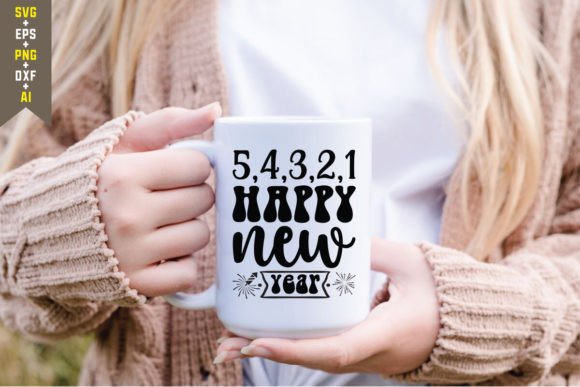
This isn’t a loud, confetti-explosion sort of graphic. From the first glance, it reads like a clean, bold typographic moment—numbers tumbling from five to one, paired with the phrase Happy New Year. The mood is anticipatory, balanced between playful and polished. The layout feels intentionally symmetrical, which matters enormously when you’re thinking about how stitches will lay down later. There’s enough space around each element that even a medium hoop could handle it without turning the design into a messy thread blob. I immediately pictured it stitched in metallic silver thread on a midnight-blue sweatshirt, tiny satin edges catching light. That’s the kind of instant mental image a well-built graphic should trigger in any embroidery designer’s mind.
From Vector to Embroidery: What to Expect
The fact that you get 100% editable, 100% color-changeable files changes the game. The package includes AI, EPS, SVG, DXF, PNG, and JPG with high-resolution 300 dpi, plus transparent backgrounds and mockups. For an embroiderer planning a digitized version, having clean SVG and EPS paths means you can pull the design straight into embroidery software, isolate numerals or words, and assign stitch types without redrawing a single curve. I’ve dealt with too many “ready to stitch” files that became a headache because the original artwork was a low-resolution JPEG. Here, the vector backbone means you can scale the 5,4,3,2,1 Happy New Year design from a tiny cap patch up to a full-back jacket motif without pixelation or weak outlines. That’s crucial for commercial apparel work.
When you’re preparing a digitized version, keep the transparent PNG handy too. It lets you test colors against fabric backgrounds before you ever thread a needle. I often overlay the PNG on a photo of the actual tote or tee I’m decorating, just to check contrast. With a design like this—where numbers need to be instantly recognizable—those pre-checks save expensive stitch-out failures.
When the Hoop Becomes a New Year’s Eve Stage
Let me walk you through a real scenario. A boutique owner asked me to create a small run of personalized holiday tote bags for a local New Year’s event. She wanted something that felt handmade but looked professional, something people would carry from a craft fair right into a party. I pulled up the 5,4,3,2,1 Happy New Year file, recolored the numbers to champagne gold, and placed the design onto a 5x7 hoop for a mid-weight canvas tote. I used a medium-weight cutaway stabilizer, not because the design was dense, but because canvas can shift under satin columns. The digitizing took about forty minutes because the elements were already separated in the original vector. No tedious node editing. The result? A crisp, even countdown that looked like it had been printed rather than embroidered, except for that lovely thread texture you only get from a running stitch outline around each numeral.
That tote sold out by noon at the event. Several customers asked if the same design would be on hoodies or pillows next. That’s the kind of response that tells an embroiderer a graphic has real commercial legs—not just on paper, but under a needle.
Fabrics and Finished Goods: Where the Design Sings
I’ve mentally tested this design across a dozen product types, and it naturally fits into:
- Sweatshirts and hoodies: The bold countdown feels like a vintage TV countdown clock; stitched large on the back or small on the chest, it pulls focus.
- Tote bags and canvas pouches: The typographic nature means it’s readable from across a room—great for farmers market totes or gift bags.
- Patches: If you scale it down to around 3 inches wide, the numbers stay legible in satin stitch, especially if you choose a heavier underlay to prevent gaps on felt or twill.
- Pillow covers and tea towels: A crisp, celebratory kitchen towel set becomes an instant holiday hostess gift.
- Baby onesies or kid tees: Surprisingly, with softer colors and a light fill stitch, the countdown becomes a cheerful “first New Year” keepsake.
The 5,4,3,2,1 Happy New Year design works on light, medium, and even dark fabrics if you flip the colors appropriately. I’d caution against extremely textured fabrics like fleece or waffle weave for very small text elements, but the numbers themselves are substantial enough that a well-digitized file can survive moderate texture without losing legibility.
Know Before You Stitch: Caution Points for Real Projects
Every design has limits, and honest designers point them out. Here’s where I’d pause and test before committing to a client order:
- Tiny hoops: If you’re trying to squeeze this into a 4x4 hoop, the “Happy New Year” text underneath the numerals might become too small for clean satin stitching. Consider splitting the design or using a running stitch for the subtext.
- Stretchy performance fabrics: Without a good cutaway stabilizer and a topper, the numerals could distort under tension. Always test on a scrap of the exact blend you’ll use.
- Dense stitch areas: The original graphic has no obvious trap for excessive stitch density, but if you’re digitizing and you cram too many fill layers into the “5” and “4,” you could create a bulletproof patch. Keep fill stitch lengths generous.
- Curved surfaces like baseball caps: Because the design is linear, a cap’s curved front panel can warp the numbers if not hooped perfectly. A flat cap or bucket hat works much better.
- Frequent washing: Any metallic or light-thread design needs stable digitizing and good thread anchoring to survive household laundry. A double run of underlay around each letter and numeral helps a ton.
The Pro Maker’s Toolbox: Preparing a Client-Ready Product
I’m a firm believer that the difference between a hobbyist and a professional is how consistently their finished product meets expectations. When I evaluate a graphic like 5,4,3,2,1 Happy New Year as a commercial asset for an embroidery business, I look at how it supports mockups, customer communication, and brand consistency. The inclusion of high-quality JPG mockups and transparent backgrounds means you can show a buyer exactly what the embroidered tote or sweatshirt will look like before you raise a needle. That builds trust. I’ve lost count of how many Etsy sellers I’ve seen struggle because they couldn’t provide a realistic preview. With this file set, you slide the graphic onto the mockup, adjust colors to match your thread palette, and suddenly you have a professional storefront image.
For embroidery digitizers, the color-changeable aspect is gold. You can test brand palettes—like a champagne shop that wants all products in their signature rose gold and cream—without manually recoloring in embroidery software. You do that in the vector file first, then digitize. It speeds up custom orders immensely.
Where the Design Elevates Handmade and Boutique Selling
I keep coming back to the sheer versatility of this countdown theme. New Year’s isn’t just one night; it appears on engagement party gifts (“counting down to forever”), milestone birthday tees, retirement celebrations, and store grand openings. The 5,4,3,2,1 Happy New Year concept stretches across niches. A craft business owner could upload the embroidered version on a toddler jacket for a New Year’s Eve family photo, or an Etsy seller might offer customizable kitchen towels with the dates changed to match the new year. Because the source file is editable, you’re not locked into a single year or a single color scheme. That’s a massive advantage for anyone selling handmade products, personalized gifts, or small shop merchandise.
The design also lends itself to layering. Imagine a blank tote with an embroidered countdown, then a fabric paint splash behind the numbers, or a patch on a denim jacket with a secret message stitched beneath the lining. The straightforward shape doesn’t compete with other decorative elements—it anchors them. That’s rare in a themed graphic.
Final Practical Notes for the Embroidery Community
Regardless of your machine brand or hoop sizes, always test the digitized version on the exact fabric you’ll sell. I recommend using a polyester thread with a slight sheen for the numerals—it mimics fireworks without becoming tacky. If you’re planning to use the design for commercial embroidery, verify any licensing details provided in the ❗️ Instructions included with the purchase. Graphic files like these usually come with specific permissions for physical finished products, and it’s worth taking five minutes to confirm what’s allowed before you list fifty items. Similarly, don’t assume the file includes embroidery machine formats (like PES or DST); you’ll need to digitize the vector artwork yourself or hire a digitizer. The supplied AI, EPS, and SVG files make that process clean and professional.
I also urge you to print the design on paper at the actual stitch size and hold it against the fabric. Check if the thin parts of the “H” or the loop of the “5” might close up in tight satin stitching. Make notes, then adjust the digitizing or scale slightly. Small design tweaks at the vector stage can save hours of seam ripping later.