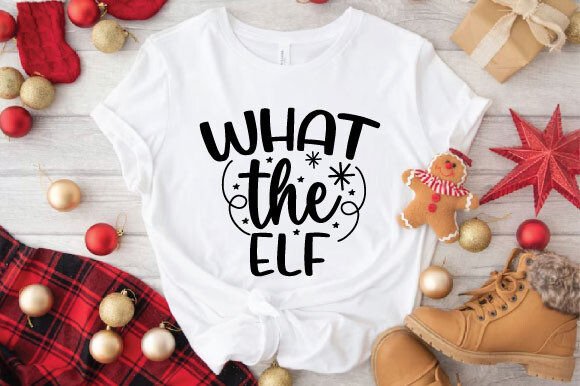
What the ELF, Funny Christmas SVG: Embroidery Design Review
First Impression: More Than a Cheeky Slogan
When I opened the folder for What the ELF, Funny Christmas SVG, the mood hit instantly. It is playful, a little irreverent, and exactly the kind of design that stops someone scrolling through a holiday market booth. The phrase sits somewhere between a classic Christmas pun and a reaction you would actually say out loud when the gift wrap tape runs out. As a designer, I immediately started picturing it in thread, not just ink. The lettering style, whether hand-drawn, bold serif, or a chunky sans depending on the actual file, will set the whole personality for a finished product. You get the sense this artwork was built to be worn, not just admired on a screen.
What You Actually Receive: Graphic Files, Not Embroidery Files
This is a crucial point for anyone in the embroidery world. The download contains SVG, PNG, DXF, and EPS files—all high-resolution Graphics that print beautifully on T-Shirt Designs, tote bags, mugs, and more. But none of them is a machine embroidery design. You will need to digitize the artwork yourself or send it to a professional digitizer. That means you have full control over stitch density, pull compensation, and thread choices, but it also means some extra work before you even hoop the fabric. I always open the SVG first to check how clean the paths are. Clean vectors make for easier digitizing, with fewer rogue nodes that can cause weird trims or jumps in the embroidery file.
The Real-Project Test: A Batch of Holiday Sweatshirts
Let’s walk through a real scenario. I planned a run of ten crewneck sweatshirts for a local craft fair. I wanted something funny, fast to stitch, and impossible to miss. After pulling the design into my embroidery software, I sized the text block to around five inches wide. On a cotton-poly fleece in heather grey, the white thread lettering popped beautifully. The phrase “What the ELF” made customers chuckle, and I sold six the first day. That is the kind of immediate customer trust and recognition a well-chosen design builds. For an Etsy seller or a small shop product, this is gold.
Where the Design Becomes a Stitch-Ready Star
In my experience, What the ELF, Funny Christmas SVG works best on items where humor belongs front and center. Think custom apparel: unisex t-shirts, slouchy sweatshirts, canvas tote bag design, kitchen towels for the holiday host, and even a funny embroidered patch on a denim jacket. It carries a casual, wink-wink tone that fits boutique branding and grab-and-go craft fair items. For a personalized gift, you could pair it with a name or the year underneath, using a simple running stitch to keep the add-on subtle. The design’s strength is that it does not try too hard; it simply delivers a mood people recognize immediately.
Small Lettering and the Hoop Size Puzzle
Even a short phrase can misbehave if you shrink it too far. I tested the digitized version at three inches wide on a scrap of quilting cotton. The center hole in the “e” and the crossbar of the “t” started to close up under dense satin stitch. You will want a minimum finished size of about four inches wide to keep letterforms crisp. That puts most stitched versions squarely in a 4x4 or 5x7 hoop size range, which is comfortable for single-head home machines. Always run a stitch sample first—I cannot say this enough. Thread tension changes with fabric, and what looks perfect on woven stabilizer might pucker on jersey.
Thread Colors and Fabric Contrast
The beauty of a text-based design is that you can go bold with thread. I stitched What the ELF, Funny Christmas SVG in a retro red on natural canvas bags and in a metallic gold on forest green fleece. Both worked. However, on a dark fabric, make sure the letters are thick enough to hold their shape without getting swallowed by the plush. A light-colored satin stitch on black cotton can shine if you use a quality underlay. Avoid extremely textured fabrics like waffle weave or high-loft terry for fine lettering; the thread sinks in and edges blur. On the other hand, a sweatshirt embroidery with a smooth fleece face handles this design just fine.
Where You Need to Be Careful
- Stretchy fabric: Ribbed cuffs, thin jerseys, and anything with spandex will fight you. A no-show mesh stabilizer alone won’t cut it. Add a fusible to lock the fibers.
- Thin fabric: A lightweight t-shirt may pucker around heavy fill stitch. Convert large filled areas to a lighter pattern fill or adjust stitch density down.
- Curved surfaces: Caps and hats can distort the word baselines if not re-digitized for a curved frame. The standard flat design will look bowed on a structured cap.
- Frequent washing: Kitchen towels and baby items need secure trims and a clean back. Tie-offs under satin stitch edges prevent threads from pulling loose after a spin in the laundry.
- Baby embroidery: While the phrase is harmless, make sure any finished baby clothes have tidy backings, no long loose threads, and a soft cover stitch if the fabric contacts skin.
Digitizing for Different Product Lines
Because you receive the vector and raster design assets, you can adapt the art for applique design, 3D puff, or even a distressed vintage look with a specialty fill. For an apron I digitized, I turned the lettering into a tonal cream fill stitch with a narrow satin stitch border, giving it a subtle elegance that still kept the joke intact. For a pillow cover, I added a light scatter of snowflake silhouettes around the text, which is easy to do when you own the base SVG and can combine elements before digitizing. That kind of flexibility makes the purchase feel more like a creative toolkit than a one-off graphic.
How It Boosts Perceived Product Value
Funny Christmas designs have a unique pull. They do not need to match anyone’s decor; they just need to make someone smile. When a customer sees What the ELF, Funny Christmas SVG stitched onto a tote bag or peeking out of a nursery gift stack, the reaction is instant. This recognition translates directly to buyer engagement in an Etsy listing. A clear, well-digitized stitching of the phrase on a folded kitchen towel photographed in good light tells buyers, “This is made by someone who gets my sense of humor.” That builds customer trust and sets your handmade product apart from mass-produced items. For commercial embroidery sellers, the humor also widens the audience—teens, young adults, co-workers, and anyone who loves a pun.
Licensing and Commercial Common Sense
Before you sew for profit, double-check the usage terms that came with the download. Many digital creators allow finished product sales with a standard license, but some require an extended license for commercial embroidery quantities. I am not inventing terms here—the product page should state them clearly. If it does not, message the designer. Also, never resell the raw files as your own digital product. You are selling the stitched outcome, not the graphics. This protects your craft business and keeps the creative community healthy.
Testing Across Mockups Before You Stitch
Digitizers often jump straight to thread, but this design rewards a few extra minutes in a printable mockup. Drop the PNG onto a photo of a blank sweatshirt, cap, and tea towel. Look at the balance. Does the word “ELF” overpower the first part? Is the spacing even against a seam or a pocket? I caught a centering issue on a kangaroo pocket mockup and fixed it before wasting an ounce of thread. Mockups are fast, free, and a smart step particularly when selling digital product previews. They also help you plan thread colors against fabric without a single stitch-out.
Stitching It All Together
At the end of a busy production week, What the ELF, Funny Christmas SVG earned a permanent spot in my holiday folder. It stitches out cleanly as a machine embroidery design after proper digitizing, works on a wide range of substrates, and hits the exact tone that sells well in a holiday embroidery collection. Whether you sew for a charity craft stall, your own Etsy seller shop, or client boutique branding, this design makes a confident, lighthearted statement. Test it on scrap fabric first, mind your lettering size, and you will have a reliable crowd-pleaser from mid-November through Christmas Eve.